The Crouch End Ley Line: London’s Hidden Mystical Path
I have identified what I call the Crouch End Ley Line, a powerful current of earth energy centered around the iconic Crouch End Clock Tower. Long before this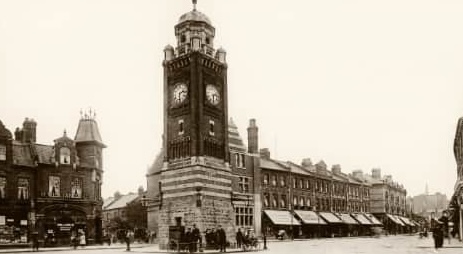 63-foot red-brick monument was erected in 1895, the site functioned as a vital 15th-century crossroads where a wooden cross marked the village boundary. This history is preserved in the name “Crouch” (derived from the Latin crux, meaning cross) and echoed by the local Wooden Cross Pub. Watch Video @YouTube
Ley lines operate as natural planetary circuits that historically served as ancient navigational pathways and markers for sacred sites; today, modern mystics believe the clock tower sits at an occult energy junction, acting as a spiritual battery that draws up and radiates this energy through Crouch End Broadway, potentially intersecting with the Hampstead Ley Line.
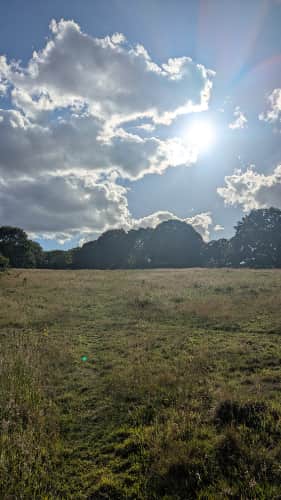 This vibrant energetic flow perfectly mirrors the area’s rich history and creative spirit—from its crowdfunded Victorian tower honoring local hero Henry Reader Williams, complete with a bronze portrait by Eros sculptor Alfred Gilbert, to quirky local lore like the 1936 “Toilet Rebellion.” It is no surprise that this powerful location continues to draw deeply creative minds, having inspired supernatural author Stephen King and served as a backdrop for Simon Pegg’s Shaun of the Dead.
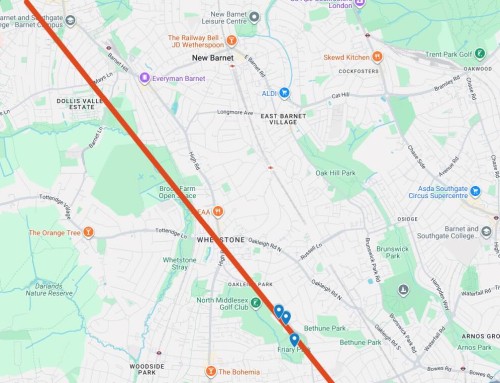
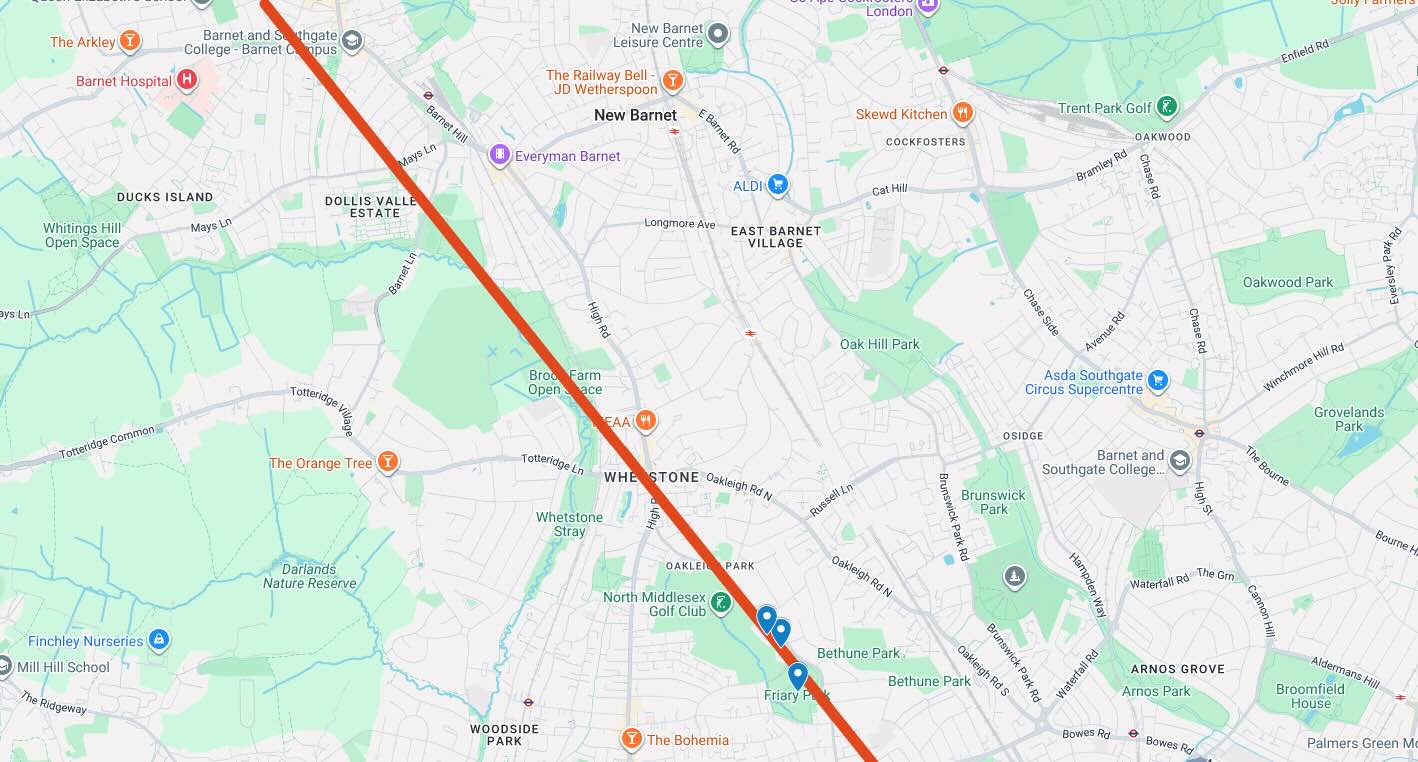
Ley Line passes over Archway Road
Intentionally aligned with powerful earth energies, the Highgate Hill Murugan Temple stands in stark contrast on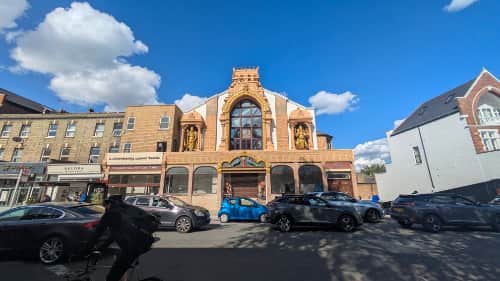 Archway Road, a spiritually charged sanctuary dedicated to Lord Murugan that occupies a historic site previously home to both Christian and Jewish congregations. Then sits down the Grade II listed Church of St Augustine of Canterbury evolved from a temporary 1882 iron mission room into a striking architectural landmark to accommodate a booming 19th-century population. Constructed between 1888 and 1915, the permanent brick-and-stone building was shaped by three successive architects—J.D. Sedding, Henry Wilson, and J. Harold Gibbons—who combined Gothic grandeur with Arts and Crafts design, resulting in its dramatic West front and remarkably bright, tunnel-vaulted nave.
St. Michael’s Church is the Highest Spire in London
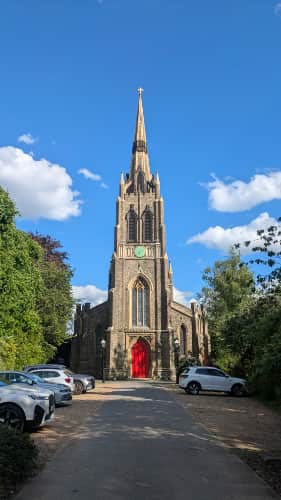 Between these sites runs the Crouch End Ley Line where passes and goes onto St. Michael’s Church Sitting at the highest geographic point of any London church. St Michael’s commands a formidable presence with its Gothic spire looming directly over Highgate Cemetery West. It was deliberately built over the former Ashurst Estate—replacing a Georgian mansion renowned for being intensely haunted—echoing the early Christian practice of absorbing the energy of older sacred sites. Activated by a Ley Line running through its front, the church acts as a spiritual battery that charges the cemetery below, fueling centuries of paranormal phenomena including an 1808 “forked-tailed” demon ambush, a ghostly cyclist, and a vanishing man. This potent energy made the churchyard the epicenter of the infamous 1970s Highgate Vampire hunts, where rival occultists and a stake-wielding Friday the 13th mob scaled the walls to access abandoned tombs in search of a red-eyed entity. Watch Full Video @YouTube
Queen Boudicca’s Mound, Hampstead Heath
The final destination is just north of Parliament Hill on Hampstead Heath, Queen Boudicca’s Mound. Also known as the Hampstead Heath Tumulus—is an ancient, tree-crowned earthwork enclosed by an iron fence that local lore claims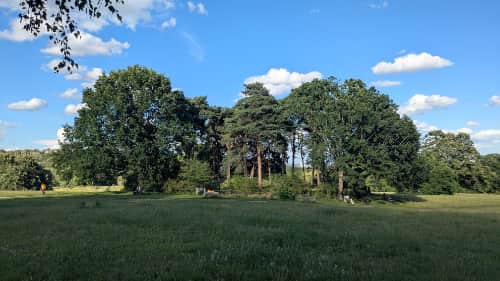 is the burial site of the warrior queen following her AD 60 defeat by the Romans. To explain the lack of physical evidence, believers argued she was cremated, a theory seemingly supported when an 1894 excavation by antiquarian Charles Hercules Read uncovered only ancient charcoal fragments rather than bones or armour, which he blamed on the Heath’s highly acidic soil. Despite its enduring mythological pull—which even drew modern Druids to place a commemorative wreath at the site in 1967—Historic England officially classifies the scheduled ancient monument as a Bronze Age barrow that actually predates Boudicca’s legendary rebellion by a millennium. Watch Full Video @YouTube